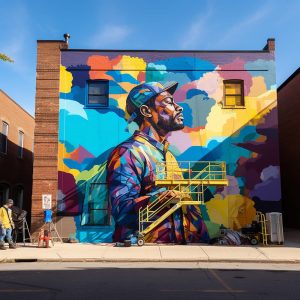
Bold abstract art moves beyond realistic representation, embracing vivid colors, energetic forms, and expressive textures to communicate emotion, movement, and imagination. Rather than depicting recognizable subjects, it encourages personal interpretation and creative exploration. Each composition offers a unique visual experience, allowing viewers to discover their own meanings and connections.
Through dynamic contrasts and artistic freedom, abstract art creates powerful impressions that inspire curiosity, reflection, and emotional engagement.
Minimalist line art proves that simplicity holds extraordinary power. With just a few deliberate strokes, artists can capture emotion, movement, and meaning. The absence of clutter forces the viewer to focus on what truly matters, creating timeless and deeply elegant visuals.
- Uses negative space effectively
- Every line has a purpose
- Black and white contrast
- Emotionally impactful
Digital art tools have revolutionized creative expression, offering unlimited colors, undo options, and infinite canvas. While purists value traditional mediums, digital artists achieve equally stunning results with far greater flexibility, speed, and accessibility, making art more democratic and widely available than ever before.
Mixed media art combines multiple materials like paint, fabric, photography, and texture into one layered composition. This freedom allows artists to express complex emotions and narratives that single-medium art cannot achieve. The result is always unique, tactile, and deeply visually rich.
- Combines paint and photography
- Adds physical texture
- Layered visual depth
Hyper-realistic portrait painting demands exceptional observation skills, deep understanding of light and shadow, precise color mixing, and extraordinary patience. Artists study anatomy, practice endlessly, and use layering techniques to build lifelike skin tones and textures that genuinely fool the human eye.