Category: Technology

  • Exploring Ethical Challenges of Artificial Intelligence in Modern Digital Society

    Exploring Ethical Challenges of Artificial Intelligence in Modern Digital Society

    Artificial Intelligence offers remarkable benefits, but it also raises critical ethical challenges that shape our digital society. As AI integrates deeper into daily life—from healthcare to finance—questions of fairness, transparency, and accountability must be addressed.

    Bias in AI systems is a growing concern. Algorithms trained on biased data can produce discriminatory outcomes in hiring, lending, or law enforcement. This highlights the need for diverse datasets and rigorous oversight.

    Privacy is another pressing issue. AI systems often rely on vast amounts of personal data, raising concerns about surveillance, consent, and misuse. Striking a balance between innovation and individual rights is vital.

    Accountability also matters. When AI systems make mistakes—such as misdiagnosing a patient or misjudging a loan application—who is responsible: the developer, the company, or the technology itself? Clear regulations are required to answer these questions.

    Ethical AI isn’t just about avoiding harm. It’s about ensuring technology benefits everyone. Initiatives promoting “responsible AI” focus on transparency, inclusivity, and human oversight. Governments, organizations, and researchers must work together to set global standards.

    Ultimately, ethical considerations are not obstacles to AI progress—they’re necessary guardrails. Addressing these challenges ensures AI develops in ways that enhance society rather than divide it.
  • Emerging Technology Trends Reshaping Tomorrow’s Digital Innovation Landscape

    Emerging Technology Trends Reshaping Tomorrow’s Digital Innovation Landscape

    The technology industry evolves rapidly, with emerging trends continually redefining how we live and work. From artificial intelligence to quantum computing, these innovations are paving the way for tomorrow’s digital world.

    AI and machine learning remain dominant, powering smarter decision-making, automation, and personalization. Quantum computing, though still in its infancy, promises to solve complex problems in seconds that current computers could never achieve.

    5G connectivity is another game-changer. Its ultra-fast speeds and low latency enable innovations in autonomous vehicles, remote healthcare, and immersive augmented reality experiences. Combined with IoT, it will expand digital ecosystems and smart infrastructure.

    Virtual Reality (VR) and Augmented Reality (AR) are reshaping entertainment, education, and training. From immersive gaming to medical simulations, these tools enhance learning and create new business opportunities.

    Green technology also rises in importance. With sustainability becoming a global priority, innovations in renewable energy, battery storage, and carbon capture are driving cleaner industries.

    The workplace of the future is another focus. Remote collaboration tools, AI-driven productivity apps, and cloud infrastructure are redefining how businesses function in an interconnected world.

    Despite the excitement, ethical concerns remain. Privacy, digital divides, and job displacement must be addressed to ensure technology benefits everyone. Governments, businesses, and communities play key roles in balancing innovation with responsibility.

    Emerging technology trends highlight one truth: the digital world never stands still. By embracing innovation while ensuring inclusivity, society can harness technology to create a smarter, more sustainable future.

  • Cloud Computing Shaping Future Business Through Scalable Digital Infrastructure

    Cloud Computing Shaping Future Business Through Scalable Digital Infrastructure

    Cloud computing has transformed how businesses operate, offering scalable, cost-effective, and flexible digital infrastructure. Instead of relying on physical servers, organizations now access computing power, storage, and software through the cloud.

    One of the biggest advantages of cloud computing is scalability. Companies can adjust resources instantly based on demand, ensuring efficiency and cost savings. Startups benefit by accessing enterprise-level tools without heavy upfront investments.

    Collaboration also thrives in the cloud. Tools like Google Workspace and Microsoft 365 allow teams to share files and work together in real-time, no matter their location. This flexibility has become crucial in the era of remote and hybrid work.

    Data security, once seen as a drawback, is now a strength. Cloud providers invest heavily in encryption, firewalls, and compliance, offering protections often stronger than on-premise systems. Disaster recovery features also ensure business continuity in case of disruptions.

    Cloud computing is not limited to storage. Advanced services like Artificial Intelligence, analytics, and machine learning are delivered through cloud platforms, enabling innovation and faster decision-making.

    Challenges remain, such as dependence on internet connectivity, potential vendor lock-in, and compliance complexities across regions. However, multi-cloud strategies and evolving regulations are addressing these issues.

    Ultimately, cloud computing empowers businesses of all sizes to innovate, scale, and stay competitive. Its flexibility ensures it will remain a cornerstone of digital transformation in the years ahead.

  • Internet of Things Connecting Devices for Smarter Homes and Cities

    Internet of Things Connecting Devices for Smarter Homes and Cities

    The Internet of Things (IoT) is transforming the way we interact with the physical world by connecting everyday objects to the internet. From smart homes to smart cities, IoT is making life more efficient, convenient, and intelligent.

    In smart homes, IoT devices like thermostats, lighting systems, and voice assistants give users control at their fingertips. These technologies not only provide comfort but also save energy by learning habits and adjusting automatically. Security systems with smart cameras and sensors add another layer of safety for households.

    On a larger scale, IoT powers smart cities. Sensors monitor traffic flow, reducing congestion and improving urban planning. Smart grids optimize energy use, while connected waste management systems make cities cleaner and more sustainable.

    Healthcare applications of IoT are equally transformative. Wearable devices monitor heart rate, sleep patterns, and physical activity, sending real-time data to doctors. This allows early intervention and personalized healthcare, improving patient outcomes.

    Industries leverage IoT for predictive maintenance, reducing downtime and saving costs. Connected machines in manufacturing provide valuable data for optimizing performance and ensuring safety. Agriculture benefits as well, with smart irrigation systems conserving water and improving crop yields.

    However, IoT also raises concerns about privacy and security. With billions of devices connected, safeguarding data becomes a critical challenge. Strong encryption, regular updates, and standardized regulations are essential for safe IoT adoption.

    The Internet of Things is no longer futuristic—it’s part of our daily reality. As connectivity expands, IoT will continue shaping smarter, more sustainable societies.

  • The Future of Work Enhanced by Artificial Intelligence and Automation

    The Future of Work Enhanced by Artificial Intelligence and Automation

    Artificial Intelligence and automation are reshaping the workplace, bringing both opportunities and challenges. From streamlining operations to augmenting human skills, these technologies are redefining how businesses function and how people work.

    AI automates repetitive tasks, freeing employees to focus on creative and strategic work. In industries like logistics, AI manages supply chains and demand forecasting, while in finance, algorithms handle transactions and fraud detection.

    Collaboration between humans and AI is becoming common. AI tools assist doctors with diagnoses, support engineers in design, and help marketers analyze consumer behavior. Instead of replacing workers, AI often enhances their productivity.

    Remote work also benefits from AI. Tools optimize virtual meetings, analyze team productivity, and provide smart scheduling, making hybrid workplaces more efficient.

    Concerns exist, particularly around job displacement. However, history shows technology often creates new opportunities while eliminating outdated roles. The focus should be on reskilling and preparing workers for AI-driven industries.

    Ultimately, the future of work will not be AI versus humans, but AI alongside humans. By embracing automation responsibly, businesses can unlock efficiency while ensuring workers thrive in a rapidly evolving world.

  • Discovering Alien Crystal Fields Beneath a Distant Sunset

    Discovering Alien Crystal Fields Beneath a Distant Sunset

    On the surface of an alien world, explorers witness a scene of breathtaking beauty. A radiant sun sinks toward the horizon, painting the sky in hues of pink and orange. In the foreground, clusters of towering crystals glow with internal light—emerald, violet, and sapphire shades sparkling against the rocky terrain. This is not a dreamscape but a tangible reality for astronauts venturing beyond Earth.

    Their spacecraft rests nearby, a sleek vessel ready to carry them further into the cosmos. Yet, for now, the crew pauses to study this extraordinary landscape. The crystals are not merely beautiful; they may hold valuable scientific and technological secrets. Some pulse faintly, suggesting unique energy properties, while others shimmer in patterns that hint at underlying structures. Collecting samples becomes both a mission priority and a privilege.

    As astronauts kneel among the glowing formations, instruments in hand, they document every detail. Each shard tells a story of geological processes alien to our world, shaped by forces we can only begin to understand. The crystals may reveal clues about the planet’s composition, atmosphere, and even its potential to support life.

    Beyond the crystals, futuristic towers rise in the distance, silhouetted against the sunset. Whether natural or constructed, their sharp forms remind travelers that this world holds mysteries waiting to be solved. The combination of natural wonder and possible civilization creates an intoxicating mix of exploration and discovery.

    This moment captures the essence of interplanetary travel: the thrill of encountering environments that defy imagination, the scientific responsibility of studying them, and the emotional awe of standing in a place no human has ever been before.

    The crystal fields beneath the alien sunset stand as a reminder of why humanity journeys into space—not only to survive but to marvel, to learn, and to expand the boundaries of possibility.

  • Artificial Intelligence Transforming Healthcare Through Smarter Diagnostic Tools Worldwide

    Artificial Intelligence Transforming Healthcare Through Smarter Diagnostic Tools Worldwide

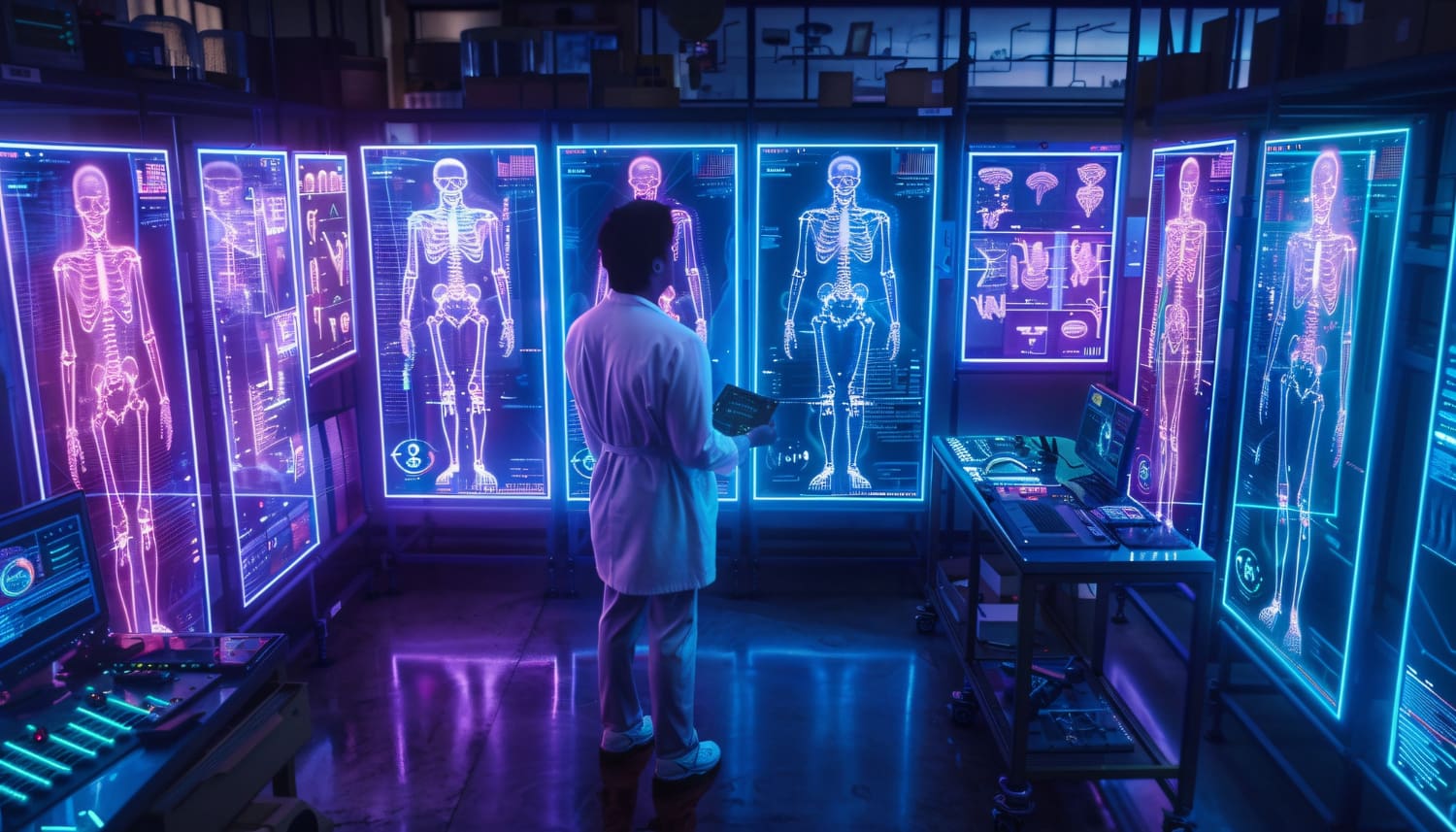
    Artificial Intelligence (AI) is redefining healthcare by improving accuracy, efficiency, and accessibility of diagnostic tools. Traditionally, doctors relied on experience, manual tests, and limited data to make decisions. Now, AI-powered systems analyze vast amounts of information in seconds, providing precise insights that save lives.

    AI-driven imaging is one major advancement. Tools can detect tumors, fractures, or anomalies in X-rays, MRIs, and CT scans faster and often more accurately than human radiologists. By flagging potential issues early, doctors can intervene before conditions worsen.

    Another breakthrough lies in predictive analytics. AI models analyze patient histories, lab results, and genetic information to forecast risks like diabetes, heart disease, or cancer. Personalized treatment plans can then be developed, ensuring better outcomes for patients.

    Chatbots and virtual health assistants are also transforming patient care. These tools answer questions, schedule appointments, and guide patients through treatments, reducing the burden on medical staff while improving accessibility.

    Despite the benefits, challenges remain. Ethical concerns, data privacy, and the risk of over-reliance on technology must be addressed. Human oversight remains essential, ensuring AI complements rather than replaces medical expertise.

    The integration of AI into healthcare is not just about technology—it’s about creating a future where care is more accurate, affordable, and accessible for everyone.

  • Blockchain Technology Revolutionizing Finance Beyond Cryptocurrency and Tokens

    Blockchain Technology Revolutionizing Finance Beyond Cryptocurrency and Tokens

    Blockchain is often associated with Bitcoin and cryptocurrency, but its potential extends far beyond digital coins. As a decentralized and transparent system, blockchain is revolutionizing industries by ensuring trust, security, and efficiency.

    In finance, blockchain enables faster and cheaper transactions. Traditional cross-border payments take days and involve high fees, but blockchain systems complete them within minutes. Smart contracts—self-executing agreements coded into the blockchain—eliminate intermediaries, reducing costs and risks.

    Outside finance, blockchain transforms supply chain management. Companies can track products from origin to consumer, ensuring authenticity and reducing fraud. This is especially important in industries like food, pharmaceuticals, and luxury goods, where trust and transparency matter most.

    Healthcare also benefits from blockchain’s secure data-sharing. Patient records can be stored on decentralized systems, accessible only by authorized professionals. This improves efficiency, reduces errors, and ensures patient privacy.

    Governments experiment with blockchain for digital identity systems and voting platforms. By reducing fraud and increasing transparency, blockchain strengthens democratic processes and enhances citizen trust.

    Despite its promise, challenges remain. Energy-intensive mining, regulatory uncertainty, and scalability issues need solutions before blockchain can achieve mainstream adoption. However, innovations like proof-of-stake and layer-2 networks address these concerns, making blockchain more sustainable and practical.

    Blockchain’s true power lies in its ability to build trust in a digital world. By combining decentralization, transparency, and security, it paves the way for new business models and societal change.

  • Human And Robot Handshake Symbolizing Trust In Digital Future

    Human And Robot Handshake Symbolizing Trust In Digital Future

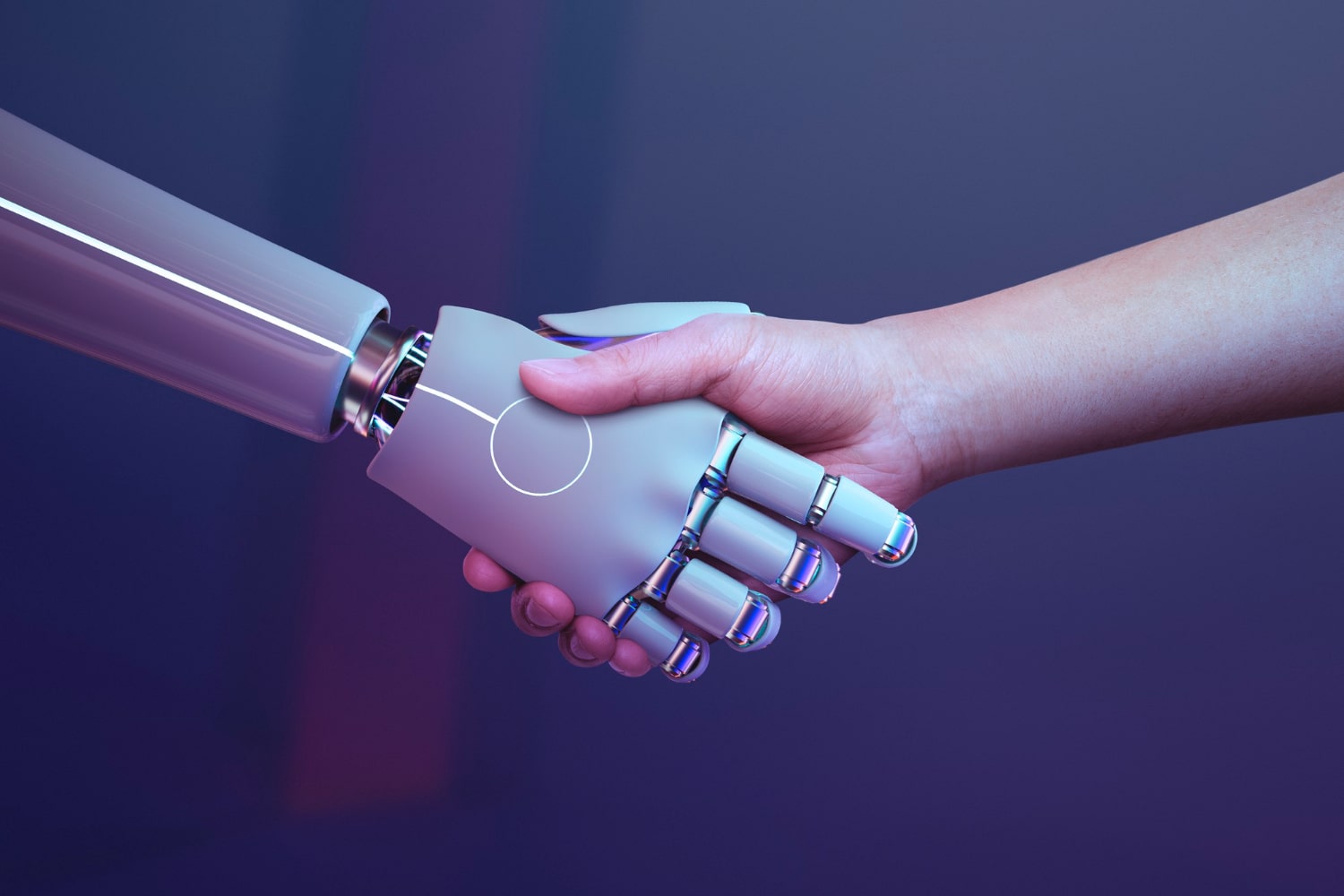
    Few images capture the essence of our times as effectively as the handshake between a human and a robot. This symbolic gesture embodies trust, collaboration, and the merging of human intelligence with artificial innovation. In the age of rapid digital transformation, such imagery highlights not just the progress of technology but also its relationship with people.

    The handshake has always been a universal symbol of partnership, understanding, and mutual respect. When extended to the relationship between humans and robots, it takes on even greater meaning. It represents the blending of human creativity and emotional intelligence with the precision, speed, and efficiency of machines. Rather than suggesting competition, the handshake signals cooperation—reminding us that technology is most powerful when it enhances human potential.

    In the digital age, artificial intelligence (AI) and robotics are no longer science fiction—they are part of everyday life. From voice assistants to factory automation, from healthcare diagnostics to financial forecasting, intelligent machines now work alongside humans in countless industries. The handshake image reflects this integration, symbolizing a future where humans and machines complement each other instead of existing in opposition.

    Futuristic visuals like this also raise important questions. How do we build trust in machines? How do we ensure that technology serves humanity ethically, transparently, and inclusively? These are pressing concerns as AI systems make increasingly complex decisions in areas like hiring, policing, and medicine. The handshake image serves as both an optimistic vision and a reminder of the responsibilities we carry in shaping this future.

    The background of futuristic digital elements enhances the symbolism. Circuit patterns, holograms, and glowing lights represent the technological backbone of modern society. Together with the handshake, the imagery conveys the idea of partnership within progress—an agreement between humanity and technology to move forward together.

    Culturally, such imagery has significant influence. It inspires confidence in technological advancement, encouraging people to embrace change rather than fear it. It also sparks curiosity, especially among younger generations, about careers in robotics, AI, and digital innovation. In many ways, the handshake image isn’t just about technology—it’s about hope, collaboration, and the shaping of a better future.

    Ultimately, the human-robot handshake is a metaphor for the digital era we are living in. It reminds us that while machines may be intelligent, it is human vision, empathy, and creativity that will guide their use. The true future of technology lies not in replacing humanity but in empowering it.

  • How Generative AI Tools Reshape Creativity in Design and Content

    How Generative AI Tools Reshape Creativity in Design and Content

    Generative AI is transforming creativity by helping designers, writers, and content creators produce innovative work faster than ever before. Unlike traditional AI, which focuses on analysis, generative models create entirely new material—artwork, music, code, or text—based on learned patterns.

    In design, AI tools generate prototypes, layouts, and branding concepts within minutes. Artists use generative models to explore styles, experiment with color palettes, or develop unique digital artwork. Content creators benefit from AI that drafts articles, scripts, or marketing copy, speeding up workflows.

    Generative AI also plays a role in entertainment. Musicians use it to compose melodies, while filmmakers generate visual effects or storyboards. Even architects leverage AI to design buildings optimized for energy efficiency and aesthetic appeal.

    However, questions of originality and ethics remain. Critics argue that generative AI may devalue human creativity or plagiarize existing works. Ensuring transparency in datasets and recognizing human oversight are essential.

    Despite these debates, generative AI empowers creators by removing repetitive tasks and offering endless inspiration. It doesn’t replace creativity—it enhances it, opening new possibilities for innovation across industries.